


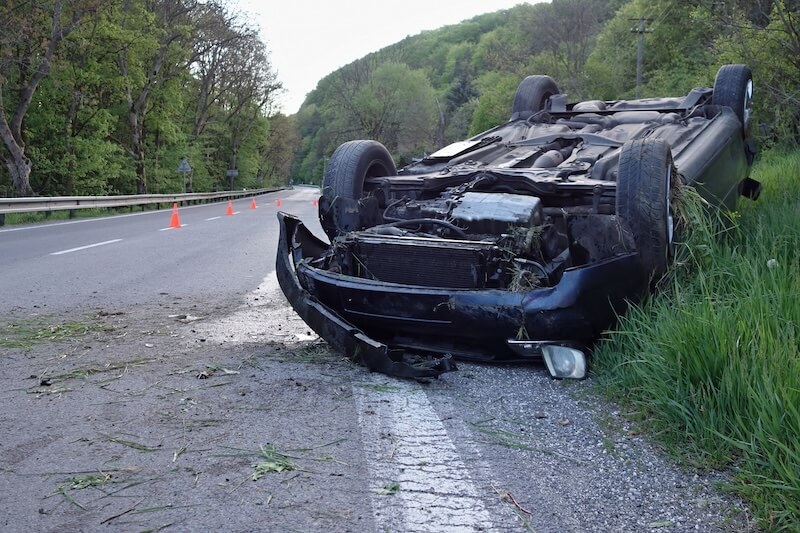
A rollover accident is one of the most frightening types of vehicle collisions. Whether it happens on a Montana highway, a rural road, or a snowy stretch of pavement, a vehicle that rolls onto its side or roof can sustain significant damage in just a few seconds.
When drivers think about rollover damage, they usually picture a crushed roof, broken windows, and damaged doors. But there’s much more happening beneath the surface. Modern vehicles are equipped with sophisticated safety systems designed to protect occupants during a rollover. These systems may activate during the accident, and many of their components need careful inspection before the vehicle can safely return to the road.
At OHS Body Shop, we know that repairing a rollover-damaged vehicle involves more than restoring its appearance. Understanding what happens to the vehicle’s safety systems is an important part of the collision repair process.
Why Rollover Accidents Are Different From Other Collisions
Most vehicle collisions involve a primary impact from the front, rear, or side. A rollover is different because the vehicle may experience several impacts as it rotates.
During a rollover, the roof, pillars, doors, windows, underbody, and other structural areas can come into contact with the road or surrounding objects. The forces involved can affect multiple sections of the vehicle, even when the initial impact seemed relatively minor.
The vehicle’s safety systems must respond to these changing conditions. Depending on the vehicle and the severity of the accident, rollover detection systems may activate side curtain airbags, seat belt pretensioners, or other restraint components.
A rollover can also cause damage to electronic sensors, wiring, and structural mounting points. These are not always visible during an initial walk-around inspection.
This is why rollover damage requires a comprehensive assessment rather than simply repairing the most obvious dents and broken panels.
How Rollover Sensors and Airbags Work
Modern vehicles may use dedicated rollover sensors or integrated electronic stability and restraint control systems to detect when the vehicle is tipping or rotating.
These systems monitor information such as vehicle acceleration, angular movement, and changes in orientation. When the system detects conditions that meet its deployment criteria, it can activate specific safety devices.
One of the most important features is the side curtain airbag. Unlike a steering wheel airbag, which protects the driver from a frontal impact, curtain airbags deploy along the side windows. They are designed to help protect occupants’ heads during certain side-impact and rollover events.
Some vehicles also have additional side airbags mounted in seats. These systems are designed to work alongside seat belts to reduce the risk of injury.
It’s important to understand that not every rollover causes every airbag to deploy. Deployment depends on the vehicle’s design, sensor readings, collision conditions, and manufacturer programming.
After an accident, technicians need to determine which systems activated and whether other components have been affected.
Why Side Curtain Airbags May Need Replacement
Side curtain airbags are particularly important during rollover accidents because occupants can move toward the side windows as the vehicle rotates.
When deployed, these airbags typically release from the roofline or upper side structure. Depending on the vehicle, they may extend along the windows and remain inflated for a period of time to provide protection during multiple stages of a rollover.
Once deployed, an airbag cannot simply be folded back into its original position. The affected component must be replaced according to the vehicle manufacturer’s repair procedures.
However, the repair may involve more than the airbag itself. The headliner, pillar trim, clips, mounting brackets, wiring, and other components may need inspection or replacement.
Technicians also need to check the areas where the airbags are installed. If the roof structure or pillars have been deformed, the mounting locations may require additional repairs.
Installing a replacement curtain airbag without addressing damage to its mounting area could compromise how the system performs in another collision.
Seat Belts and Pretensioners Are Just as Important
During a rollover, seat belts play a critical role in keeping occupants inside the passenger compartment and helping prevent them from being thrown around the vehicle.
Many modern vehicles use seat belt pretensioners that activate during certain collisions. These devices rapidly tighten the belt to help reduce occupant movement.
Depending on the vehicle, a rollover event may trigger pretensioners even if the front airbags never deploy.
After the accident, the seat belt assemblies must be inspected according to manufacturer requirements. Activated pretensioners generally require replacement, and other components may also need attention.
The belt webbing, retractors, buckles, anchors, and mounting points should all be considered. A belt that looks normal may still have been subjected to forces that affect its ability to protect occupants.
We discussed this in more detail in our article, Why Your Seat Belts May Need Replacement After a Collision—even If They Look Fine. It’s an important reminder that vehicle safety components cannot be judged by appearance alone.
Roof and Pillar Damage Can Affect Occupant Protection
One of the most obvious consequences of a rollover is roof damage. Depending on how many times the vehicle rolled and what it struck, the roof may have dents, creases, tears, or significant deformation.
But the roof is not simply an exterior panel. It is part of the vehicle’s structural safety design.
The pillars surrounding the windshield, doors, and rear windows help support the roof and contribute to the passenger compartment’s integrity. If these areas are damaged, the vehicle may no longer have the same structural characteristics it had before the accident.
A proper inspection needs to determine whether the damage is limited to exterior sheet metal or extends into structural components.
Depending on the vehicle, repairs may involve specialized measuring equipment, manufacturer-approved straightening procedures, or replacement of affected structural sections.
Some structural components cannot be repaired using conventional methods because doing so could affect their strength. This is particularly important in modern vehicles that use different grades of high-strength steel, aluminum, and other engineered materials.
Our article on cosmetic versus structural damage explains why identifying the difference is so important after an accident.
What Happens to Electronic Safety Systems?
A rollover can also affect electronic systems that drivers rarely think about.
Depending on the vehicle, the collision may damage sensors used by the airbag system, electronic stability control, rollover detection, or other driver-assistance technologies.
Wiring harnesses and connectors may be damaged when the roof, doors, or interior structures are crushed or displaced. Electronic modules may also store fault codes or crash-event information that must be addressed during the repair process.
After the physical repairs, technicians may need to perform diagnostic scans and follow specific procedures to restore affected systems.
Some vehicles may also require recalibration of cameras, radar sensors, or other driver-assistance components if the collision or subsequent repairs have affected their position or operation.
This is particularly important because modern safety features are interconnected. A vehicle may look completely repaired while an electronic system still has a fault that needs attention.
Can a Rollover-Damaged Vehicle Be Repaired?
That depends on the extent of the damage.
Some vehicles sustain relatively limited damage during a single rollover, while others experience extensive structural deformation. The repair decision depends on the condition of the vehicle, the availability of replacement components, manufacturer repair procedures, and the overall cost of restoring it.
A collision repair team needs to inspect the roof, pillars, doors, suspension, underbody, restraint systems, and other affected areas before determining the appropriate repair plan.
In some cases, the vehicle may be considered a total loss by the insurance company. In others, repairs may be possible and economically justified.
It’s important to remember that a vehicle being technically repairable does not automatically mean every repair method is acceptable. Structural and safety-related work must follow the applicable manufacturer requirements.
Why a Complete Inspection Matters After a Rollover
After a rollover, the visible damage can be overwhelming. But the most important repairs may involve components hidden behind interior trim, beneath exterior panels, or inside electronic systems.
A thorough inspection helps identify the full extent of the damage and establishes what needs to be repaired or replaced. It also helps prevent overlooked problems from becoming safety concerns later.
At OHS Body Shop, we understand that getting a vehicle back into good condition means looking beyond its appearance. Our approach to collision repair focuses on evaluating the damage and carrying out repairs in accordance with the appropriate procedures.
If your vehicle has been involved in a rollover accident in Kalispell, Whitefish, Columbia Falls, Polson, or the surrounding Flathead Valley, don’t rely on a quick visual inspection. Have it assessed by an experienced collision repair team before considering it safe to drive again.
A vehicle can be repaired to look like it did before the accident. The real priority is making sure the repairs address the damage that matters most: the parts and systems designed to protect you.