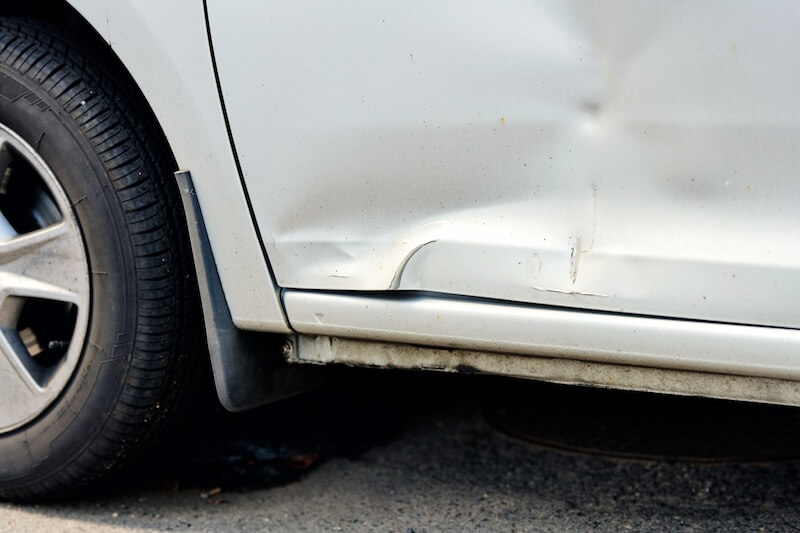
A side-impact accident can happen in an instant. Another vehicle runs a stop sign, someone backs into your car in a parking lot, or a driver loses control on a slippery Montana road. The result may be a damaged door, a deep dent along the lower side of your vehicle, or a crushed section just beneath the doors.
That lower section is known as the rocker panel.
At first glance, rocker panel damage may look like an ordinary body repair. But this area can play an important role in your vehicle’s structural design. Depending on the make and model, it may contain reinforced sections, high-strength steel, and other components that help manage impact forces and support the passenger compartment.
That’s why repairing a damaged rocker panel is not always as simple as pulling out a dent and applying fresh paint.
What Exactly Is a Rocker Panel?
The rocker panel is the section of the vehicle body located below the doors, running between the front and rear wheel openings.
On many vehicles, it forms part of the lower side structure of the passenger compartment. It may be visible as an exterior panel, but underneath it can contain several layers of metal and structural reinforcements.
In unibody vehicles, the rocker panel is integrated into the overall body structure. Unlike traditional body-on-frame designs, where a separate frame supports the vehicle body, a unibody vehicle relies on the body itself to provide much of its structural strength.
The rocker panel can work together with the floor, pillars, and other reinforced sections to help maintain the passenger compartment’s integrity.
This means damage in this area can be more significant than its appearance suggests.
Why Rocker Panels Are Important During a Side Impact
During a side-impact collision, the vehicle’s structure needs to manage energy from a relatively small area. Unlike a frontal collision, where there may be more space for energy-absorbing structures, a side impact can bring the collision force closer to the occupants.
Manufacturers design vehicles with reinforced door structures, pillars, rocker panels, and other components to help manage these forces.
The rocker panel contributes to the strength of the lower side structure. Depending on the vehicle’s design, it may help distribute forces through connected structural sections rather than allowing them to concentrate in one location.
If the rocker panel is crushed or deformed, the damage may extend into the floor, door openings, or nearby structural areas.
This is why a technician needs to determine whether the damage is limited to the outer panel or has affected the underlying structure.
The Difference Between Cosmetic and Structural Rocker Panel Damage
Not every dent in a rocker panel means the vehicle has serious structural damage.
A shallow scrape from a parking barrier, for example, may affect only the exterior finish. In some cases, the repair may involve metal finishing, refinishing, or replacement of a non-structural outer section.
A harder side impact is a different matter.
If the collision has crushed the rocker panel, created sharp folds, distorted the door opening, or affected the lower pillars, the damage may involve structural components.
Signs that deserve closer inspection include doors that no longer close properly, visible changes in the gaps around the doors, damaged seams, buckled metal, or unusual deformation along the floor.
However, the absence of these symptoms does not guarantee that the underlying structure is undamaged. Some deformation may be hidden beneath exterior panels or interior trim.
Our article on cosmetic versus structural damage explains why this distinction matters in modern collision repair.
Why Some Rocker Panel Repairs Require Specialized Equipment
Rocker panel repairs can involve more than conventional dent removal.
When structural sections are damaged, technicians may need to use dedicated measuring systems to determine whether the vehicle’s dimensions remain within manufacturer specifications.
These measurements help identify movement or deformation in areas that are not easily visible. The vehicle may need to be positioned on specialized equipment so that technicians can evaluate and, where permitted, restore the affected structure.
The repair method depends on the vehicle’s construction and the type of material used.
Some rocker panels are made from conventional steel, while others incorporate high-strength steel or advanced materials. These metals do not all respond to heat, pulling, or straightening in the same way.
A repair method that is acceptable for one section of a vehicle may be prohibited for another. Certain high-strength steel components, for example, have specific restrictions on heating or straightening because their engineered properties could be compromised.
That is why manufacturer repair procedures are so important.
Why Cutting and Welding Must Be Done Carefully
Some rocker panel repairs require partial or complete replacement of damaged sections.
This can involve removing exterior panels, separating factory joints, installing replacement sections, and using approved joining methods.
Depending on the vehicle, these methods may include resistance spot welding, MIG brazing, rivets, structural adhesives, or a combination of techniques.
The correct approach depends on the original construction and manufacturer specifications.
Welding in the wrong location, using excessive heat, or failing to restore the original joining method can affect the strength of the repaired area.
The technician must also consider nearby components, wiring, interior materials, and fuel or electrical systems that could be affected during the repair.
This is not a job where a one-size-fits-all approach is appropriate.
How Rocker Panel Damage Can Affect Your Doors
One of the most noticeable consequences of rocker panel damage is a door that no longer opens or closes correctly.
Because the rocker panel sits directly below the doors, deformation in this area can affect the geometry of the door opening.
The door may begin rubbing against the body, the gaps may become uneven, or the latch may no longer align properly. In more severe cases, the door opening itself may be distorted.
Simply adjusting the hinges or latch may not solve the underlying problem if the structure is no longer within specification.
Technicians need to identify the source of the misalignment before deciding how to correct it.
What About Airbags and Side-Impact Sensors?
A side-impact collision may also affect the vehicle’s restraint system.
Depending on the design, sensors may be located in doors, pillars, or other sections of the vehicle. These sensors help the restraint control system determine whether side airbags or curtain airbags should deploy.
If the collision damages a sensor, its mounting location, or the related wiring, the system may need additional inspection and diagnostic work.
If airbags or seat belt pretensioners activated, the affected components must be addressed according to manufacturer procedures.
A rocker panel repair should therefore not be viewed in isolation when the vehicle has experienced a significant side impact. The surrounding safety systems and structural areas need consideration as part of the overall repair.
Why Proper Rocker Panel Repair Matters in Montana
Montana drivers face a variety of road conditions. Snow, ice, gravel, wildlife, and changing weather can all contribute to accidents.
A side impact may happen on an icy intersection, in a parking lot, or on a narrow road where there is little room to avoid another vehicle.
After the accident, it’s important to make sure the vehicle is properly evaluated before returning to normal use.
A poorly repaired rocker panel can create problems beyond appearance. Depending on the damage, it may affect door alignment, corrosion protection, structural integrity, or the performance of related safety components.
Proper refinishing and corrosion protection also matter. When factory coatings and protective materials are disturbed during structural repairs, they need to be restored according to the applicable procedures.
Get the Damage Checked Before It Becomes a Bigger Problem
Rocker panel damage is easy to underestimate because much of the affected area sits low on the vehicle. A dent may look like a relatively minor cosmetic issue, but the structure underneath could tell a different story.
At OHS Body Shop, we believe every collision deserves a proper assessment. The goal is to understand the full extent of the damage and determine the appropriate repair method based on the vehicle’s construction and manufacturer requirements.
If your vehicle has suffered a side-impact collision in Kalispell, Whitefish, Columbia Falls, Polson, or the surrounding Flathead Valley, don’t assume the damage is only cosmetic. Have the rocker panels and surrounding structure inspected by an experienced collision repair team.
Getting the repair right matters—not just for how your vehicle looks, but for how it protects you on the road.