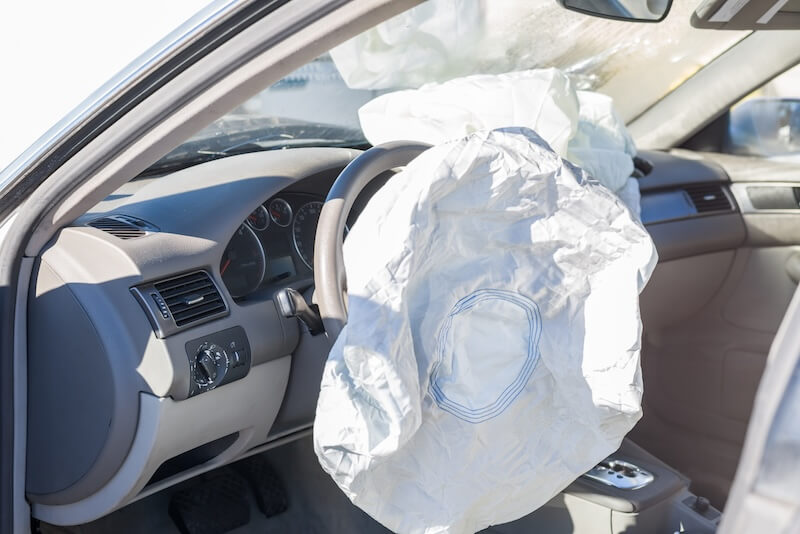
When airbags deploy in a car accident, it’s usually a sign that the collision was serious enough for your vehicle’s safety systems to step in. For drivers, the immediate concern is often the damage they can see. The steering wheel airbag may be hanging out, the passenger-side dashboard could be torn open, or side curtain airbags may have dropped from the roofline.
But once the initial shock wears off, another important question comes up: What needs to be replaced before the vehicle is safe to drive again?
The answer is not always as simple as installing a new airbag. Modern vehicles use interconnected restraint systems designed to work together in fractions of a second. When one or more airbags deploy, other components may also have activated, sustained damage, or recorded information that affects how the system operates.
At OHS Body Shop, we believe it’s important for Montana drivers to understand why airbag-related collision repairs require more than replacing the parts that are visibly damaged.
Why Airbag Deployment Is Only Part of the Story
An airbag is one part of a larger system called the Supplemental Restraint System, commonly known as the SRS. It works alongside seat belts, crash sensors, electronic control modules, wiring, and other components to help protect vehicle occupants during a collision.
When a crash occurs, sensors detect changes in vehicle movement and acceleration. The system evaluates the information and determines whether airbags or seat belt pretensioners should activate. If deployment is necessary, the system triggers the appropriate devices almost instantly.
The important thing to understand is that these components are designed to work as a coordinated safety system. Replacing a deployed airbag without checking the rest of the system could leave the vehicle with an incomplete or improperly functioning safety setup.
Even when the visible damage appears limited, the collision may have affected components hidden behind the dashboard, inside the seats, or within the vehicle’s body structure.
Which Airbag Components Usually Need Replacement?
The first items that need attention are the airbags that actually deployed. A deployed airbag cannot simply be folded back into place or repaired for reuse. It must be replaced with an appropriate component according to the vehicle manufacturer’s repair procedures.
Depending on the type of collision, this may involve the driver-side steering wheel airbag, the front passenger airbag, side-impact airbags mounted in seats or doors, or curtain airbags that deploy along the roofline.
However, the list of required replacement parts can extend beyond the airbags themselves.
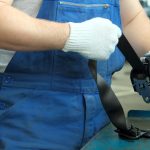
Seat belt pretensioners, for example, are designed to tighten the seat belt rapidly during certain collisions. This helps reduce slack and position the occupant more securely. If a pretensioner activates, it may need to be replaced along with related seat belt components.
The airbag control module may also require replacement or an approved procedure to address crash data, depending on the manufacturer’s instructions. Impact sensors, wiring, connectors, mounting brackets, and related hardware must also be inspected. Some manufacturers specify replacement of particular components after deployment, even if they do not appear damaged.
There is no universal parts list that applies to every vehicle. The exact requirements depend on the make, model, year, collision conditions, and manufacturer repair information.
Why Seat Belts Need Attention After Airbags Deploy
Airbags often get most of the attention after a crash, but seat belts are just as important.
Many modern seat belt systems include pretensioners that activate during a collision. Once triggered, these devices may not function as intended in another accident. The belt webbing, retractor, buckle, and mounting points may also have experienced forces that are not obvious during a quick visual inspection.
A seat belt can look perfectly normal and still have internal damage or a component that needs replacement. This is especially important when the belt was being worn during the collision.
The National Highway Traffic Safety Administration advises that restraint systems be inspected after a crash and that damaged components be replaced. Vehicle manufacturers provide more specific instructions about which seat belt assemblies and related parts must be replaced under particular collision conditions.
That is why a proper collision repair should include checking the seat belt system rather than focusing only on the deployed airbags.
What About Sensors, Wiring, and the Airbag Control Module?
This is where airbag repairs can become more complicated.
Crash sensors are positioned throughout the vehicle to detect the direction and severity of an impact. Depending on the design, sensors may be located near the front of the vehicle, along the sides, or in other designated areas.
If the collision damages a sensor or its mounting location, the system may not be able to detect a future impact correctly. Wiring and electrical connectors also need attention because damaged connections can interfere with communication between the system’s components.
The airbag control module monitors the restraint system and helps determine when deployment is necessary. After a collision, it may store diagnostic trouble codes or crash-event information. Some vehicles allow specific procedures to restore the module to service, while others require replacement. The correct approach must come from the manufacturer’s repair information.
A warning light disappearing from the dashboard is not, by itself, proof that the entire system has been repaired correctly. The system needs to be checked using the appropriate diagnostic procedures, and any required repairs must be completed before the vehicle is considered ready for normal use.
Why Manufacturer Repair Procedures Matter
One of the biggest mistakes in airbag-related collision repair is assuming that every vehicle follows the same rules.
Different manufacturers use different restraint system designs and have specific requirements for inspecting, replacing, and reinstalling components. Even two vehicles from the same manufacturer may have different procedures depending on their model year and equipment.
For example, a manufacturer may require replacement of certain sensors, seat belt assemblies, control modules, fasteners, or steering components after a particular type of deployment. Other parts may only need inspection and replacement if damage is found.
These requirements are not arbitrary. Airbags and restraint systems are engineered to operate within precise conditions. Using the wrong parts or skipping a required procedure can compromise the system’s ability to protect occupants in another collision.
The National Highway Traffic Safety Administration emphasizes that proper airbag replacement should follow vehicle manufacturer procedures, which may require attention to sensors, wiring, and electronic components in addition to the airbag module itself.
At OHS Body Shop, following the appropriate repair information is an essential part of returning a vehicle to a safe, properly repaired condition.
Airbag Deployment Can Also Mean Hidden Interior and Structural Damage
Airbag deployment can cause damage beyond the restraint components themselves. A deployed passenger airbag may damage the dashboard or surrounding trim. A side airbag can affect the seat cover and related seat components. Curtain airbag deployment may require removal and inspection of headliner materials, pillars, and other interior trim.
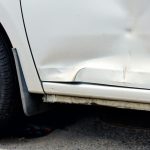
The collision that triggered the airbags may also have damaged the vehicle’s underlying structure. A front-end impact, for example, can affect structural components behind the bumper and radiator support. A side impact can affect door structures, pillars, or rocker panels.
This is why a complete collision inspection matters. The visible damage tells only part of the story.
Our article on hidden damages after minor collisions explains why damage that is not immediately visible can still affect a vehicle’s safety and performance. The same principle applies after a more serious accident involving airbag deployment.
Can You Drive a Car After the Airbags Have Deployed?
In most cases, a vehicle with deployed airbags should not be driven until it has been properly inspected and repaired. Even if the engine starts and the vehicle appears capable of moving, the restraint system may no longer provide the protection it was designed to deliver.
There may also be other problems, including damaged seat belts, electrical faults, compromised steering components, or structural damage that affects how the vehicle behaves on the road.
A vehicle that has been in a serious collision should be transported for inspection rather than driven simply because it still runs.
After repairs are completed, the required diagnostic checks and system inspections should confirm that the restraint system is functioning according to the vehicle manufacturer’s procedures.
Getting Your Vehicle Back to Safe Condition
An airbag deployment can make an already stressful accident even more overwhelming. There are insurance questions, repair estimates, replacement parts, and concerns about how long the vehicle will be out of service.
The most important thing is not to rush the process or treat airbag replacement as a cosmetic repair. These systems are there to protect you and your passengers, and every required component needs to be addressed properly.
At OHS Body Shop, we understand that collision repair is about much more than making a vehicle look good again. It is about carefully evaluating the damage, identifying what needs to be repaired or replaced, and restoring the vehicle in accordance with the appropriate repair procedures.
If your airbags deployed in an accident in the Flathead Valley, have your vehicle inspected by an experienced collision repair team before getting back on the road. Whether you’re in Kalispell, Whitefish, Columbia Falls, or the surrounding Montana communities, OHS Body Shop is here to help you understand the repair process and take the next step toward getting your vehicle back in shape.