


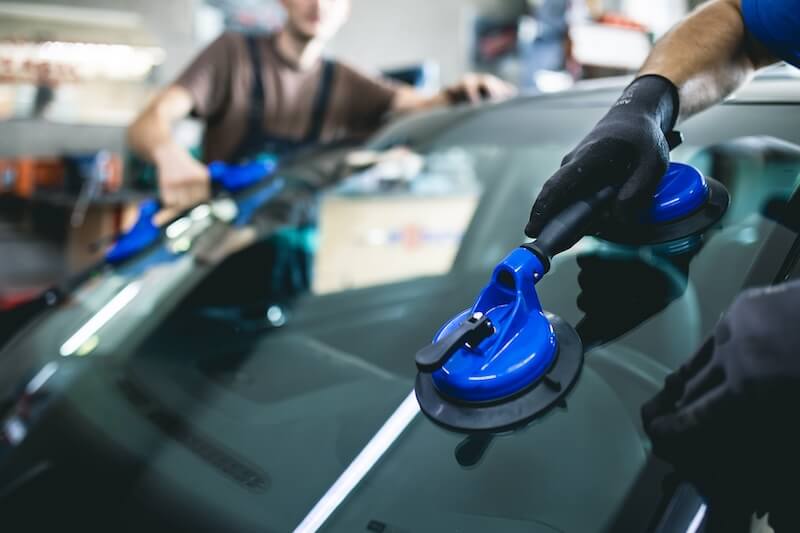
When a vehicle is involved in an accident, the windshield can sustain damage in several ways. It may crack from an impact, break when the vehicle’s structure deforms, or become damaged during the collision repair process.
For many drivers, replacing a windshield seems like a relatively simple job. Remove the broken glass, install a new one, and the vehicle is ready to go.
But modern windshields are much more important than most people realize. They contribute to the vehicle’s structural design, help support certain airbag systems, and often provide a mounting location for cameras and other driver-assistance technology.
That means improper installation can affect more than visibility.
At OHS Body Shop, we understand that collision repair involves paying attention to components that might not appear particularly complicated. Here’s why windshield replacement deserves careful attention after an accident.
Your Windshield Does More Than Keep Rain Out
A windshield’s most obvious purpose is to protect occupants from wind, rain, road debris, and other external elements. It also provides the driver with a clear view of the road.
However, the windshield is also part of the vehicle’s engineered safety structure.
Modern windshields are typically made from laminated safety glass. This consists of two layers of glass bonded to an inner plastic layer. When the glass breaks, the plastic layer helps hold the pieces together rather than allowing the windshield to shatter into loose fragments.
The windshield is also bonded to the vehicle’s body using specialized automotive adhesive.
This bonded connection helps the windshield contribute to the structural performance of the vehicle. Depending on the vehicle’s design, it can play a role in maintaining passenger compartment integrity during certain collisions and supporting the roof structure during a rollover.
A windshield that is incorrectly installed may not provide the intended level of structural support.
How a Windshield Supports Airbag Performance
Many drivers don’t realize that the windshield can play a role in how certain airbags operate.
In some vehicles, the passenger-side frontal airbag deploys upward and uses the windshield as part of its intended deployment path. The windshield needs to remain properly bonded so that the airbag can perform as designed.
If the windshield adhesive has not cured properly or the glass is not securely installed, the windshield could become dislodged during deployment.
This is one reason windshield installation is not simply about fitting the glass into the opening. The adhesive, preparation, positioning, and curing process all matter.
The exact role of the windshield varies by vehicle design, so technicians need to follow the applicable manufacturer requirements.
Why the Adhesive Matters So Much
Modern windshields are generally installed using specialized automotive urethane adhesives.
This material creates the bond between the glass and the vehicle body. It is designed to provide strength while accommodating the movement and vibration that occur during normal driving.
However, the adhesive must be applied correctly.
The bonding surfaces need to be properly prepared, and the correct adhesive product must be used. Application thickness, temperature, humidity, and curing conditions can all affect the installation.
One particularly important consideration is safe drive-away time. This refers to the period required for the adhesive to reach the strength needed for the vehicle to be driven safely under the specified conditions.
That time can vary depending on the adhesive product, environmental conditions, and vehicle requirements.
Driving too soon after windshield replacement can compromise the installation before the adhesive has reached the required strength.
A professional installation should account for the adhesive manufacturer’s instructions and the vehicle manufacturer’s procedures.
Why Collision Damage Can Affect the Windshield Opening
Sometimes the windshield itself isn’t the only damaged component.
A frontal collision, rollover, or impact involving the roof and pillars can distort the area surrounding the windshield.
The windshield opening is formed by structural sections such as the A-pillars, roof rail, and upper and lower body structures.
If these areas have moved or become deformed, installing replacement glass without addressing the underlying damage can lead to poor fitment or improper bonding.
Technicians need to inspect the opening and determine whether the surrounding structure remains within the required dimensions.
The replacement glass must fit correctly and have the appropriate contact with the bonding surfaces.
Our article on cosmetic versus structural damage explains why damage behind the visible exterior can be just as important as the damage drivers immediately notice.
Modern Windshields Often Contain ADAS Technology
One of the biggest changes in automotive glass over recent years is the integration of advanced driver-assistance systems.
Many modern vehicles have cameras mounted near the rear-view mirror, positioned behind the windshield. These cameras may support features such as lane departure warnings, lane-keeping assistance, traffic sign recognition, and automatic emergency braking.
Some vehicles also have rain sensors, light sensors, humidity sensors, or other equipment attached to the windshield.
When the glass is replaced, these components may need to be transferred, reinstalled, inspected, or recalibrated.
Even small differences in camera positioning or the optical properties of replacement glass can affect how certain systems interpret the road.
This is why selecting compatible glass and following the correct installation procedures are important.
Why ADAS Camera Calibration May Be Necessary
ADAS cameras are designed to operate within precise positioning requirements.
When a windshield is replaced, the camera may be removed or disturbed. Even if the camera is reinstalled in what appears to be the same position, its alignment may have changed.
Depending on the vehicle manufacturer’s instructions, static calibration, dynamic calibration, or a combination of procedures may be required.
Static calibration is generally performed in a controlled environment using specified targets and equipment. Dynamic calibration involves driving the vehicle under the conditions required by the manufacturer.
Not every vehicle uses the same procedure, and not every windshield replacement automatically requires identical calibration work.
The important thing is to check the manufacturer’s requirements and complete any necessary procedures.
Our article on ADAS sensor recalibration after a collision explains why these systems need proper attention after repairs.
Why the Correct Replacement Glass Matters
Not all windshields are identical.
Depending on the vehicle, replacement glass may need to accommodate cameras, sensors, heating elements, acoustic properties, heads-up displays, or other specialized features.
A windshield that physically fits the vehicle may not necessarily have the correct specifications for all its equipment.
For example, some vehicles use acoustic glass designed to reduce cabin noise. Others have special areas for camera mounting or infrared and solar-control properties.
Using incompatible glass could affect the operation of certain features or create problems during calibration.
The replacement part should meet the vehicle’s requirements, including any applicable safety and compatibility standards.
What Happens If a Windshield Is Installed Incorrectly?
Improper installation can create several problems.
The most obvious is water leakage. If the bonding area is not properly sealed, rainwater may enter the cabin and damage interior trim, carpets, or electrical components.
Wind noise can also occur if the glass does not sit correctly or the sealing process is incomplete.
More importantly, a poorly bonded windshield may not provide the structural performance expected by the vehicle’s design.
Incorrect installation can also affect ADAS camera operation if the camera is not positioned correctly or the required calibration is skipped.
These problems may not all appear immediately, which is why proper installation and post-replacement checks matter.
Why Windshield Replacement Is Part of Collision Repair
After an accident, windshield damage may be connected to other repairs.
For example, replacing a roof panel, repairing an A-pillar, or restoring the front body structure may require windshield removal.
The glass may be damaged during the collision or need to be removed to access surrounding components.
In these situations, windshield replacement needs to be coordinated with the rest of the repair process.
The technician must consider the condition of the windshield opening, the adhesive system, the vehicle’s safety equipment, and any required calibration procedures.
Our article on why roof damage after an accident sometimes requires replacement explains how roof and surrounding structural repairs can affect other vehicle components.
Getting Your Windshield Replaced Properly
A new windshield should do more than look clear and fit into the opening. It needs to be installed using the correct glass, adhesive, preparation methods, and procedures.
If the vehicle has cameras or other technology connected to the windshield, those systems also need to be checked according to the manufacturer’s requirements.
At OHS Body Shop, we understand that modern collision repair involves many interconnected components. The goal is to restore the vehicle properly, not simply replace the parts that are visibly damaged.
If your windshield was damaged in an accident in Kalispell, Whitefish, Columbia Falls, Polson, or the surrounding Flathead Valley, have the vehicle evaluated by an experienced collision repair team.
Your windshield is an important part of your vehicle’s safety design. Making sure it is installed correctly is worth the extra attention.