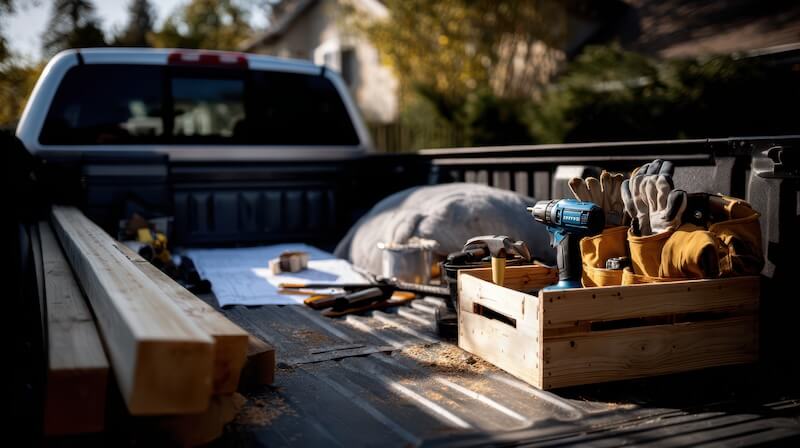
Pickup trucks are built for work, hauling, towing, and everyday driving. Whether you’re using yours to transport equipment, carry supplies, tow a trailer, or simply get around Montana, you probably expect it to handle a fair amount of punishment.
But even a tough-looking pickup truck can sustain significant damage in an accident.
A rear-end collision, a sideswipe, or an impact involving the tailgate can leave the truck bed dented or misaligned. Sometimes the damage seems limited to a scratched bedside or a bent tailgate. Other times, the truck bed may appear relatively normal while the mounting points or surrounding structure have been affected.
That’s what makes pickup truck collision damage worth inspecting carefully.
At OHS Body Shop, we understand that repairing a pickup truck involves more than making the body panels look good. The truck bed, its mounting points, and the surrounding structure all deserve attention after an accident.
How Pickup Truck Beds Are Attached
Unlike the body of many passenger cars, a conventional pickup truck typically has a separate bed mounted behind the cab.
The bed is attached to the vehicle’s frame using designated mounting points and hardware. This allows the truck bed and cab to be separate assemblies while the frame supports the vehicle’s major components.
The exact design varies between manufacturers and models, but the bed generally includes the floor, inner wheelhouses, bedside panels, front bed panel, and tailgate.
Depending on the truck, it may also include integrated lighting, cameras, sensors, electrical wiring, and other equipment.
Because the bed is a separate assembly, an impact can affect its alignment relative to the cab and frame.
A truck may still be drivable after an accident, but that doesn’t automatically mean the bed is properly positioned or that the mounting points are undamaged.
Why Rear-End Collisions Can Damage More Than the Tailgate
The tailgate often takes the first hit in a rear-end collision, especially when another vehicle strikes the truck from behind.
At low speeds, the damage may be limited to the tailgate or rear bumper. But a harder impact can transfer forces into the rear bed panel, bedside structures, mounting points, and sometimes the frame.
The rear bumper and its attachment points also need inspection. Depending on the design, the bumper may be connected to structural sections that can deform during an impact.
If the collision is severe enough, the frame itself may require measurement and inspection.
This is particularly important for trucks used for towing or hauling. Damage affecting the frame, hitch mounting area, or rear structure can have consequences beyond appearance.
Our article on understanding frame straightening and how it impacts vehicle safety and performance explains why structural measurements matter after a significant collision.
Bedside Damage Can Hide Problems With the Inner Wheelhouses
The exterior bedside is the large panel running along either side of the pickup bed.
These panels can be damaged by sideswipes, parking accidents, impacts with objects, and collisions involving another vehicle.
A visible dent may seem relatively minor, but the impact can also affect the inner wheelhouse behind it.
The wheelhouse provides clearance for the rear tire and forms part of the bed assembly. If it is pushed inward, the damage may affect the fit of the bedside, the available tire clearance, or nearby components.
Technicians need to inspect both the exterior panel and the structures behind it.
Depending on the damage, the bedside may be repairable, or replacement may be necessary. The inner wheelhouse may also require attention.
Why Bed Mounting Points Matter
One of the most overlooked areas after a pickup truck accident is the bed mounting system.
The mounting points help secure the bed to the frame. If these locations are damaged, shifted, or distorted, the bed may no longer sit correctly.
Drivers may notice uneven gaps between the bed and cab, a tailgate that doesn’t align properly, or a bed that appears slightly crooked.
However, not all mounting damage is immediately visible.
A collision can deform the mounting brackets, affect the attachment hardware, or cause movement in the surrounding structure. Technicians need to inspect the mounting areas and confirm that the bed is positioned according to the vehicle’s specifications.
Simply adjusting the tailgate or shifting the bed to improve its appearance may not address the underlying problem.
What About the Pickup Truck Frame?
Most traditional pickups use a body-on-frame design. The frame supports the engine, transmission, suspension, cab, and bed.
This design is well suited to trucks that need to carry loads and tow trailers, but it doesn’t make the vehicle immune to structural damage.
A collision can affect the frame rails, crossmembers, suspension mounting points, and other components.
Depending on the severity and direction of the impact, technicians may need to use specialized measuring equipment to check whether the frame remains within the manufacturer’s dimensional specifications.
Not every dented truck bed means the frame is damaged. However, when the collision forces are significant, the frame should be considered as part of the inspection.
If the frame is damaged, repair or replacement decisions must follow the applicable manufacturer procedures and the requirements for that specific vehicle.
Why Towing and Hauling Equipment Needs Attention
Pickup trucks are often used for tasks that place additional demands on the vehicle.
A truck that regularly tows a trailer or carries heavy equipment depends on the proper condition of its frame, suspension, hitch, and related mounting points.
After a rear-end collision, the trailer hitch and its attachment points should be inspected if they were involved in or exposed to the impact.
A hitch can appear intact while the surrounding mounting area has been damaged. The same applies to bed-mounted equipment, toolboxes, cargo racks, and other accessories.
If the truck is used commercially, these inspections are especially important. Returning a damaged vehicle to towing or hauling duties without checking the affected components can create additional risks.
Modern Pickup Trucks Have More Technology Than Ever
Today’s pickup trucks are equipped with considerably more technology than older models.
Depending on the vehicle, the rear bed area may include parking sensors, rear-view cameras, blind-spot monitoring components, trailer assistance systems, and wiring for lighting or other equipment.
Some trucks have cameras mounted in the tailgate or around the rear bumper. Others use sensors that help drivers detect nearby vehicles or obstacles.
If these components are damaged, disconnected, or moved during a repair, additional diagnostic checks or calibration procedures may be necessary.
A replacement tailgate or bumper may also need to accommodate the correct sensors and camera equipment.
Our article on ADAS sensor recalibration after a collision explains why modern vehicle safety technology needs proper attention after collision repairs.
Repairing or Replacing a Pickup Truck Bed
Whether a damaged truck bed can be repaired depends on the extent and location of the damage.
A shallow dent in a bedside may be suitable for conventional metal repair. A more extensive impact may require replacement of the bedside, tailgate, or other sections.
Some pickup beds are made from steel, while others use aluminum or composite materials. The repair process must account for the material and the manufacturer’s instructions.
For aluminum-bodied trucks, specialized repair practices and equipment may be required. Aluminum and steel also need to be handled carefully to avoid cross-contamination during repair.
Our article on aluminum body repair in Montana explains why working with modern vehicle materials requires specific knowledge and procedures.
Don’t Forget Corrosion Protection
Pickup trucks are often exposed to harsh working conditions. They may carry wet equipment, encounter gravel and mud, and spend time on roads treated during winter.
When a bed panel is repaired or replaced, factory coatings and protective materials may be disturbed.
Proper refinishing, seam sealing, and corrosion protection help protect the repaired areas from moisture and other environmental exposure.
This is especially important around panel joints, mounting areas, and sections where metal has been cut or joined.
A repair that looks good on the outside should also address the areas that are less visible.
Get Your Pickup Truck Properly Inspected
A pickup truck bed may look like a relatively simple part of the vehicle, but it is connected to several important systems and structures.
After an accident, the tailgate, bed panels, inner wheelhouses, mounting points, frame, bumper, hitch, and electronic components may all need inspection.
At OHS Body Shop, we understand that pickup trucks are often more than everyday transportation. They’re work vehicles, family vehicles, and important tools for getting things done.
If your truck has been involved in an accident in Kalispell, Whitefish, Columbia Falls, Polson, or the surrounding Flathead Valley, have it inspected by an experienced collision repair team before returning it to regular use.
The goal is to make sure your truck looks right, functions properly, and is ready for the work ahead.