


After an accident, most drivers naturally focus on the parts of the vehicle that are visibly damaged. A crushed bumper, dented quarter panel, or broken tail light is easy to notice. But what about the components underneath the vehicle?
The exhaust system is one area that can sustain damage during a collision without immediately attracting attention.
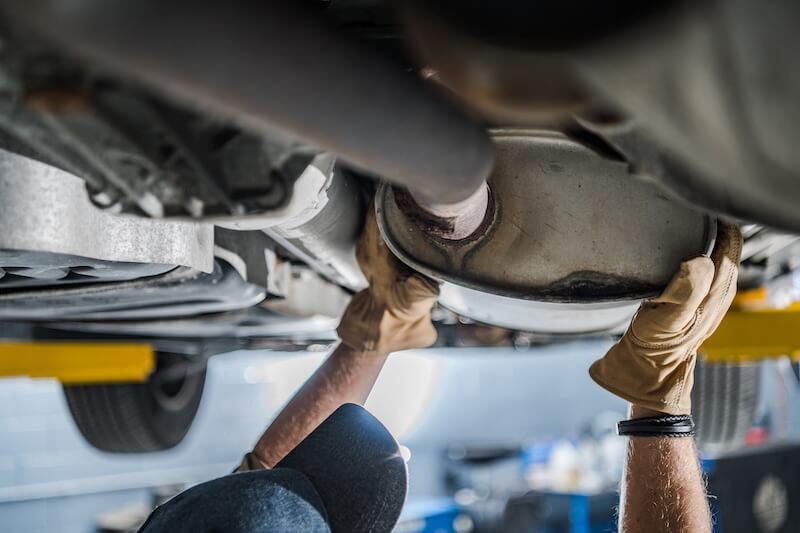
It runs along the underside of the vehicle, connecting the engine’s exhaust outlets to the rear of the vehicle. Depending on the design, it includes exhaust pipes, catalytic converters, mufflers, resonators, oxygen sensors, heat shields, and mounting hardware.
An impact involving the rear bumper, underbody, or underside of the vehicle can damage these components or move them out of position.
At OHS Body Shop, we believe a proper collision inspection should consider more than exterior body panels. Here’s what drivers should know about exhaust system damage after an accident.
What Does Your Vehicle’s Exhaust System Do?
The exhaust system has several important jobs.
First, it carries exhaust gases away from the engine and directs them safely toward the rear of the vehicle.
It also helps control emissions. The catalytic converter is designed to reduce certain harmful pollutants in the exhaust gases before they leave the vehicle.
The muffler and resonator help manage engine noise, while oxygen sensors monitor exhaust conditions and provide information to the engine management system.
Heat shields and mounting brackets help keep the exhaust system properly positioned and protect nearby components from excessive heat.
All these parts need to work together. Damage to one section can affect the operation of the entire system.
How a Collision Can Damage the Exhaust System
Exhaust system damage can occur in several types of accidents.
A rear-end collision may push the exhaust outlets, muffler, or rear pipes forward. An impact underneath the vehicle can crush pipes or damage components mounted near the floor.
A side impact may also affect exhaust routing if the collision reaches the underside or rocker area.
Even a relatively low-speed accident involving a steep driveway, road debris, or an obstacle can damage exhaust components if the vehicle makes contact underneath.
The impact may bend pipes, crack joints, break hangers, or damage mounting brackets.
In more severe cases, the exhaust system may be pushed against the vehicle’s floor or other components.
These problems can lead to unusual noises, vibration, exhaust leaks, or heat-related damage.
Warning Signs of Exhaust Damage After an Accident
One of the most common signs is a change in engine or exhaust noise.
A damaged exhaust pipe or leaking connection may create a louder sound, rattling, hissing, or unusual vibration.
Drivers may also notice the exhaust system hanging lower than normal or touching parts of the vehicle.
A strong exhaust smell inside the cabin is another serious warning sign. Exhaust gases can contain carbon monoxide, which is colorless and odorless. You should never rely on smell to determine whether carbon monoxide is present.
If you suspect exhaust gases are entering the cabin, stop driving, move to fresh air, and arrange professional inspection. If anyone experiences symptoms such as headache, dizziness, nausea, or confusion, seek emergency medical assistance.
A dashboard warning light may also appear if the collision has damaged oxygen sensors, wiring, or other emissions-related components.
These symptoms don’t necessarily identify the exact cause, but they indicate that the vehicle needs attention.
Why Exhaust Mounting Points Matter
The exhaust system is supported by brackets, hangers, and rubber isolators designed to keep it positioned correctly while allowing some movement and vibration.
During a collision, these mounting points can bend, break, or become detached.
If the exhaust system is no longer supported correctly, it may hang too low or contact other vehicle components.
This can cause rattling, vibration, additional damage, or excessive stress on exhaust joints.
Technicians need to inspect the mounting points as well as the pipes and muffler. Replacing a damaged pipe without addressing broken supports may lead to recurring problems.
What Happens When the Catalytic Converter Is Damaged?
The catalytic converter is one of the most important components in the exhaust system.
It helps reduce harmful emissions by converting certain pollutants into less harmful substances through chemical reactions.
A collision can damage the converter’s outer housing, connecting pipes, mounting points, or nearby sensors.
A severe impact may also cause internal damage to the ceramic or metallic substrate inside the converter.
Not every dent or external mark means the converter has stopped working. However, if the impact has caused structural damage, internal movement, or sensor-related problems, further inspection may be necessary.
Replacing a catalytic converter can be expensive, so it’s important to identify the actual damage rather than automatically assuming the entire component needs replacement.
Why Heat Shields Shouldn’t Be Overlooked
Heat shields are designed to protect the vehicle’s floor, fuel system, wiring, and other nearby components from exhaust heat.
They may be installed around the exhaust pipes, catalytic converter, or other areas that operate at high temperatures.
During a collision, a heat shield can become bent, loosened, or detached.
A damaged shield may create rattling noises, but its importance goes beyond noise reduction. If it no longer provides the intended protection, nearby materials and components may be exposed to excessive heat.
Technicians should check that the shields are properly positioned and securely attached after an accident involving the underbody or exhaust system.
What About Oxygen Sensors and Exhaust Wiring?
Modern vehicles use oxygen sensors to monitor the exhaust gases and help the engine management system maintain appropriate operating conditions.
Depending on the vehicle, sensors may be installed before and after the catalytic converter.
A collision can damage a sensor, its wiring, or its connector. An exhaust pipe that has been bent or displaced may also put additional strain on the wiring.
If the sensor stops providing accurate information, the vehicle may illuminate the check-engine light or experience changes in fuel efficiency and engine operation.
A diagnostic scan can help identify stored fault codes, but the codes need to be interpreted alongside a physical inspection.
Replacing a sensor without checking the wiring or the underlying exhaust damage may not solve the problem.
Why Exhaust Damage Can Affect Other Vehicle Systems
The exhaust system is located near several important components.
Depending on the vehicle, it may run close to the fuel tank, fuel lines, brake lines, electrical wiring, floor panels, and suspension components.
If the exhaust is pushed out of position, it may contact or place stress on these nearby systems.
This is particularly important after a serious underbody collision.
A complete inspection should consider the surrounding areas rather than treating the exhaust system as an isolated component.
Our article on fuel system damage after a collision explains why underbody damage can affect components that drivers don’t normally see.
How Exhaust System Repairs Fit Into Collision Repair
The appropriate repair depends on the extent of the damage.
A damaged hanger or bracket may be replaceable without replacing the entire exhaust assembly. A bent pipe or damaged muffler may require replacement of the affected section.
More extensive damage may involve catalytic converters, sensors, heat shields, or other components.
Technicians also need to consider whether the exhaust system has affected nearby body panels or underbody structures.
If the collision has damaged the floor or other structural areas, those repairs may need to be addressed as part of the overall collision repair plan.
The manufacturer may also specify whether certain exhaust components can be repaired or must be replaced.
Why You Shouldn’t Ignore Exhaust Problems After an Accident
An exhaust system that looks slightly bent may seem like a minor issue, especially if the vehicle still runs normally.
But exhaust leaks, damaged mounting points, and displaced components can create problems that become more serious over time.
A loose exhaust pipe could eventually separate. A leak may allow exhaust gases to enter areas where they shouldn’t. Damaged heat shields may expose nearby components to excessive heat.
If you notice unusual noises, vibration, a hanging exhaust pipe, or suspected exhaust fumes after a collision, have the vehicle inspected before continuing to drive it.
Get a Complete Inspection After an Underbody Collision
The underside of your vehicle is easy to forget because most of its components are hidden from view.
However, the exhaust system is an important part of your vehicle’s operation, emissions control, and overall condition.
At OHS Body Shop, we believe that a thorough collision assessment means looking beyond visible exterior damage. If the impact involved the rear bumper, underbody, or lower sections of your vehicle, the exhaust system may deserve attention too.
If you’ve been involved in an accident in Kalispell, Whitefish, Columbia Falls, Polson, or the surrounding Flathead Valley, have your vehicle inspected by an experienced collision repair team.
Getting your vehicle back into shape means checking the components you can see—and the ones you can’t.