


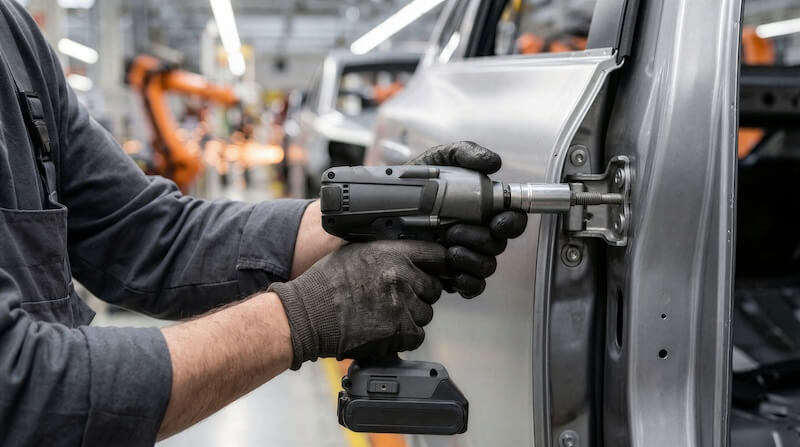
A damaged car door is one of the most familiar sights after an accident. It may have a large dent, scratched paint, broken glass, or damage along the edges. Sometimes the door won’t open at all. Other times, it still opens and closes, but something doesn’t feel quite right.
Drivers often assume the problem is limited to the door panel itself. But a collision can also affect the hinges, latch, striker, and the body structure where these components attach.
These parts may not attract much attention compared with a damaged bumper or crushed fender, but they play an important role in the vehicle’s everyday operation and safety.
At OHS Body Shop, we know that proper collision repair means checking more than the exterior panels. Door hardware and alignment deserve careful attention, especially after a side-impact accident.
How Car Door Hinges and Latches Work
Your vehicle’s doors are attached to the body using hinges. These allow the door to swing open and closed while keeping it properly positioned within the door opening.
Most conventional car doors use upper and lower hinges, although designs vary by manufacturer and vehicle type.
The latch mechanism is located along the edge of the door. When the door closes, the latch engages with a striker mounted on the vehicle’s body. This keeps the door securely closed while driving.
Many modern vehicles also include secondary safety catches, electronic locking mechanisms, child safety locks, and sensors that communicate with other vehicle systems.
All these components need to work together. The hinges keep the door positioned correctly, while the latch and striker secure it to the body.
If any of these parts are damaged or misaligned, the door may not close properly or remain securely latched.
How a Collision Can Damage Door Hinges
A side-impact collision can place significant force on the door and its attachment points.
Even if the outer door panel only has moderate damage, the impact may have transferred force through the hinges and into the surrounding body structure.
In some cases, the hinges may bend or shift. Mounting bolts can loosen, and the metal around the hinge attachment points may become distorted.
A collision involving the front fender or A-pillar can also affect the area where the front door hinges are mounted. Similarly, damage near the B-pillar may affect the rear door opening and its related hardware.
The problem isn’t always obvious. A door might still open, but it may sit slightly lower than before or require extra force to close.
These small changes can indicate that something has moved.
Why Door Alignment Matters
A properly aligned door should sit evenly within the body opening. The gaps around the door should be consistent, and the door should close without excessive force.
After an accident, technicians inspect the door’s position in relation to the fender, roofline, rocker panel, and rear quarter panel.
If the door is misaligned, the cause needs to be identified before making adjustments.
Sometimes the hinges are the problem. In other cases, the door itself may be distorted, the striker may have moved, or the surrounding body structure may have been damaged.
Simply adjusting the striker to make the door close can hide a more serious underlying issue.
Proper alignment also matters for weather sealing. A door that does not sit correctly may allow water, wind, or excessive road noise into the cabin.
What Happens When the Door Latch Is Damaged?
The latch is responsible for keeping the door closed while the vehicle is moving. If it has been damaged by an impact, the door may not engage securely with the striker.
Drivers might notice that the door bounces back when they try to close it, needs to be slammed, or produces an unusual clicking sound.
In more serious cases, the latch may fail to hold the door securely.
A damaged latch should never be ignored. If a door does not close and remain securely latched, the vehicle should not be driven until the issue has been inspected and corrected.
The latch assembly may need replacement, but technicians should also inspect the striker and surrounding mounting area.
Modern vehicles may use electronic components within the door latch system. Depending on the model, damage may affect power locks, door-ajar sensors, alarm functions, or other electronic features.
Why the Door Striker Matters Too
The striker is the metal component attached to the vehicle body that the door latch grabs when the door closes.
It may look like a small, simple piece of hardware, but its position is important. If the striker is bent, loose, or shifted, the door may not latch correctly.
A collision can move the striker mounting area or deform the surrounding pillar.
Technicians need to inspect the striker, its fasteners, and the metal around its mounting points. If the body structure has been damaged, adjusting the striker alone may not provide a proper repair.
The goal is to restore the door’s correct position and ensure that the latch engages as intended.
Hidden Damage Behind the Door Panel
A collision can also damage components hidden inside the door.
Behind the exterior panel, a modern vehicle door may contain window regulators, wiring harnesses, speakers, side-impact protection beams, sensors, and other equipment.
A side impact may deform the inner door structure or affect the components attached to it.
Depending on the vehicle, technicians may need to remove the interior door trim to inspect the damage properly. This can reveal problems that are impossible to identify from the outside.
The side-impact protection beam deserves particular attention. It is designed to contribute to occupant protection during certain collisions, and damage to it should be assessed according to the vehicle manufacturer’s procedures.
Our article on modern bumpers and their role in vehicle safety explains a similar point: components that appear relatively simple can play an important role in a vehicle’s overall safety design.
How Door Damage Can Affect Airbags and Sensors
Modern doors may contain or connect to several safety-related systems.
Depending on the vehicle, side-impact sensors may be installed in the door or nearby structural areas. The restraint control system uses information from these sensors to determine whether certain airbags should deploy.
A collision can damage the sensors, wiring, connectors, or mounting locations.
Some vehicles also have sensors that detect whether a door is open, monitor locking status, or communicate with other electronic systems.
If these components are affected, the repair may require diagnostic scanning, replacement of damaged parts, or additional procedures specified by the manufacturer.
This is another reason a door repair should not be treated as a purely cosmetic job.
Repairing or Replacing a Damaged Door
Whether a damaged door can be repaired depends on the extent of the damage and the vehicle’s construction.
A relatively shallow dent may be repairable through conventional metalwork. More extensive damage, especially around the hinges, latch, side-impact beam, or inner door structure, may make replacement the better option.
Replacement doors also need to be matched to the vehicle’s specifications and equipped with the appropriate hardware and safety components.
After installation, technicians need to check the door gaps, hinge operation, latch engagement, window operation, locking system, and weather seals.
If the collision affected the surrounding structure, those areas must be addressed before the door can be properly aligned.
Don’t Ignore a Door That Doesn’t Close Like It Used To
A door that suddenly needs to be slammed, sits unevenly, or makes unusual noises after an accident is worth investigating.
These symptoms may indicate something as simple as a shifted striker, but they can also point to bent hinges or damage to the surrounding body structure.
At OHS Body Shop, we believe the details matter. A quality collision repair should restore the appearance of your vehicle while also addressing the components that affect how it operates.
If your vehicle has experienced a collision in Kalispell, Whitefish, Columbia Falls, Polson, or the surrounding Flathead Valley, have the doors and their mounting points inspected as part of the repair process.
A properly repaired door should do more than look right. It should close securely, align correctly, and operate the way the manufacturer intended.