After an accident, some vehicle damage is relatively straightforward to understand. A damaged bumper can often be removed and replaced, while a dented door may be repairable or replaceable depending on the severity of the impact.
But what happens when the damage is to the quarter panel?
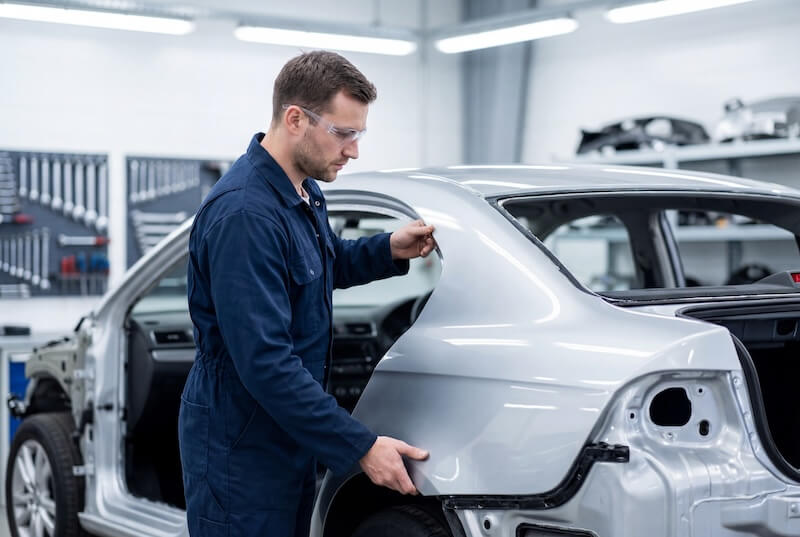
The quarter panel is the large body section surrounding the rear wheel opening and extending toward the rear of the vehicle. It is an important part of your car’s exterior appearance, but replacing it is often considerably more complicated than replacing a door or bumper.
Unlike many bolt-on body panels, a quarter panel is commonly integrated into the vehicle’s body structure. It may be attached through factory welds, adhesives, and other joining methods. Removing and replacing it requires careful planning, specialized equipment, and attention to the manufacturer’s repair procedures.
At OHS Body Shop, we understand that repairs involving quarter panels require more than simply removing damaged metal and installing a new piece. Here’s what makes this job so involved.
What Is a Quarter Panel?
The quarter panel is the exterior body section located around the rear wheels of most passenger cars. It generally extends from the rear door area to the rear bumper and includes the wheel arch.
On a two-door vehicle, the quarter panel may extend farther forward because there is no rear door. On SUVs and other vehicles, the design can vary considerably.
Quarter panels are typically part of the vehicle’s body assembly rather than separate bolt-on components. They may connect to the rocker panel, rear body structure, roof area, pillars, and wheelhouse.
This integration is one of the main reasons replacement can be complicated.
A damaged front fender, for example, is often bolted to the vehicle and can be removed without cutting factory structural joints. A quarter panel usually requires a more involved process.
Why Quarter Panel Damage Can Be More Serious Than It Looks
Quarter panel damage often happens during rear-end collisions, side impacts, parking lot accidents, and accidents involving stationary objects.
A vehicle might be struck near the rear wheel, pushed sideways into a barrier, or hit from behind at an angle. The resulting damage can include dents, creases, torn metal, and deformation around the wheel opening.
The visible damage may be limited to the outer panel, but the impact can also affect the inner wheelhouse, trunk area, rear body panel, suspension mounting areas, or other connected components.
For example, a collision near the rear wheel may affect the alignment of the wheel opening or damage nearby suspension components. A harder impact may transfer forces into the vehicle’s underlying structure.
This is why technicians need to inspect more than the damaged exterior surface.
Our article on hidden damages after minor collisions explains why an accident can create problems that are not immediately visible.
Can a Quarter Panel Be Repaired Instead of Replaced?
Absolutely. Replacement is not always necessary.
If the damage is relatively shallow and the metal has not been excessively stretched or torn, conventional metal repair may be possible. A technician can work the damaged area back toward its original shape, prepare the surface, and refinish it.
However, the decision depends on several factors.
The location of the damage matters. A relatively small dent in an accessible section may be easier to repair than a deep crease near the wheel opening or a structural joint.
The material also matters. Some vehicles use steel quarter panels, while others may incorporate aluminum or different material combinations. The repair method needs to be appropriate for the material.
There are also situations where replacement is the better option. Extensive stretching, torn metal, severe deformation, damage around factory seams, or manufacturer restrictions may make conventional repair unsuitable.
A proper inspection helps determine which approach is appropriate for the specific vehicle.
Why Quarter Panel Replacement Requires Cutting and Joining
When a quarter panel cannot be repaired, replacement often involves removing a section of the vehicle’s exterior body.
Technicians first identify the manufacturer’s approved replacement procedure. This information specifies where the panel can be separated, which factory joints need to be removed, and how the replacement section should be installed.
Depending on the vehicle, the process may involve drilling out factory spot welds, separating bonded joints, and carefully removing the damaged panel without unnecessarily affecting surrounding structures.
The replacement panel then needs to be positioned accurately and attached using the specified joining methods.
These may include resistance spot welding, MIG welding, structural adhesives, rivets, or a combination of techniques.
The exact process varies by vehicle. Some manufacturers specify particular sectioning locations, while others require replacement of a larger assembly.
Cutting or joining a quarter panel in the wrong location can affect the strength and performance of the repaired body. That’s why following manufacturer procedures is essential.
What Happens to the Inner Wheelhouse?
One of the most important areas to inspect during quarter panel repair is the inner wheelhouse.
The wheelhouse is the structure surrounding the tire inside the vehicle body. It helps create the space for the wheel and connects with other parts of the body assembly.
When a quarter panel is struck near the wheel opening, the inner wheelhouse may also be deformed.
If this damage is overlooked, the replacement exterior panel may not fit correctly. There could also be problems with wheel clearance, sealing, or corrosion protection.
Technicians need to check the surrounding metal and confirm that the relevant dimensions and mounting locations are correct before installing the replacement panel.
Why Paint Matching and Blending Matter
Once the quarter panel has been repaired or replaced, the next challenge is making the new finish look consistent with the rest of the vehicle.
Quarter panels are relatively large surfaces, and their position makes color differences particularly noticeable.
Even when the correct paint formula is used, the new finish may look slightly different from the surrounding panels because of the vehicle’s age, environmental exposure, previous repairs, or variations in the original paint.
For this reason, refinishing may involve blending the color into adjacent panels rather than painting only the replacement section.
The goal is to create a smooth, natural transition without obvious differences in shade or appearance.
Our article on the art and science of paint blending after collision repairs explains why achieving a consistent finish takes more than selecting the right paint code.
Why Corrosion Protection Is Essential
Quarter panel replacement involves disturbing factory coatings and joints.
When the original panel is removed, some protective materials may be damaged or removed in the process. The new panel also creates joining areas that need proper sealing and corrosion protection.
This is particularly important in Montana, where vehicles can experience moisture, snow, and winter road treatments.
If exposed metal and repaired joints are not properly protected, corrosion can develop over time.
Depending on the vehicle, the repair may require seam sealers, corrosion-resistant primers, cavity wax, and other manufacturer-specified materials.
Restoring corrosion protection is an important part of completing the repair, not an optional cosmetic extra.
How Long Does Quarter Panel Replacement Take?
Quarter panel replacement is generally more involved than replacing a bolt-on panel, so it can take considerably longer.
The timeline depends on the extent of the damage, the vehicle’s design, parts availability, the number of related components that need attention, and the refinishing work required.
Interior trim, glass, lighting, bumpers, and other components may need to be removed and reinstalled. Additional damage discovered during disassembly can also affect the repair schedule.
If the vehicle requires a supplemental insurance estimate, approval may be needed before all the work can proceed.
Our article on why some collision repairs require supplements explains why the initial estimate may change once hidden damage becomes visible.
Choosing the Right Repair Approach
Quarter panel damage is a good example of why collision repair requires careful evaluation.
A repair that looks straightforward from the outside may involve several connected components and factory joining points. The right approach depends on the vehicle’s construction, the extent of the damage, and the manufacturer’s repair requirements.
At OHS Body Shop, we understand the importance of restoring both the appearance and integrity of a vehicle. The goal is not simply to make the damaged area look smooth again. It’s to carry out the repair correctly, including the necessary structural work, corrosion protection, and refinishing.
If your vehicle has sustained quarter panel damage in Kalispell, Whitefish, Columbia Falls, Polson, or the surrounding Flathead Valley, have it inspected by an experienced collision repair team.
A quarter panel replacement may be a complex job, but getting the details right makes all the difference.